January
-
The Chan Zuckerberg Initiative (CZI) awards BBI $4.5 million to advance its work on genetic variants, including partnering with patient organizations within CZI’s “Rare As One” Project. The two-year grant will enable BBI to make significant progress toward creating a comprehensive Atlas of Variant Effects (AVE), benefitting clinicians and individuals carrying rare genetic variants, which often have unknown or poorly understood effects. (see: https://brotmanbaty.org/news/chan-zuckerberg-initiative-supports-bbi-to-better-understand-genetic
-
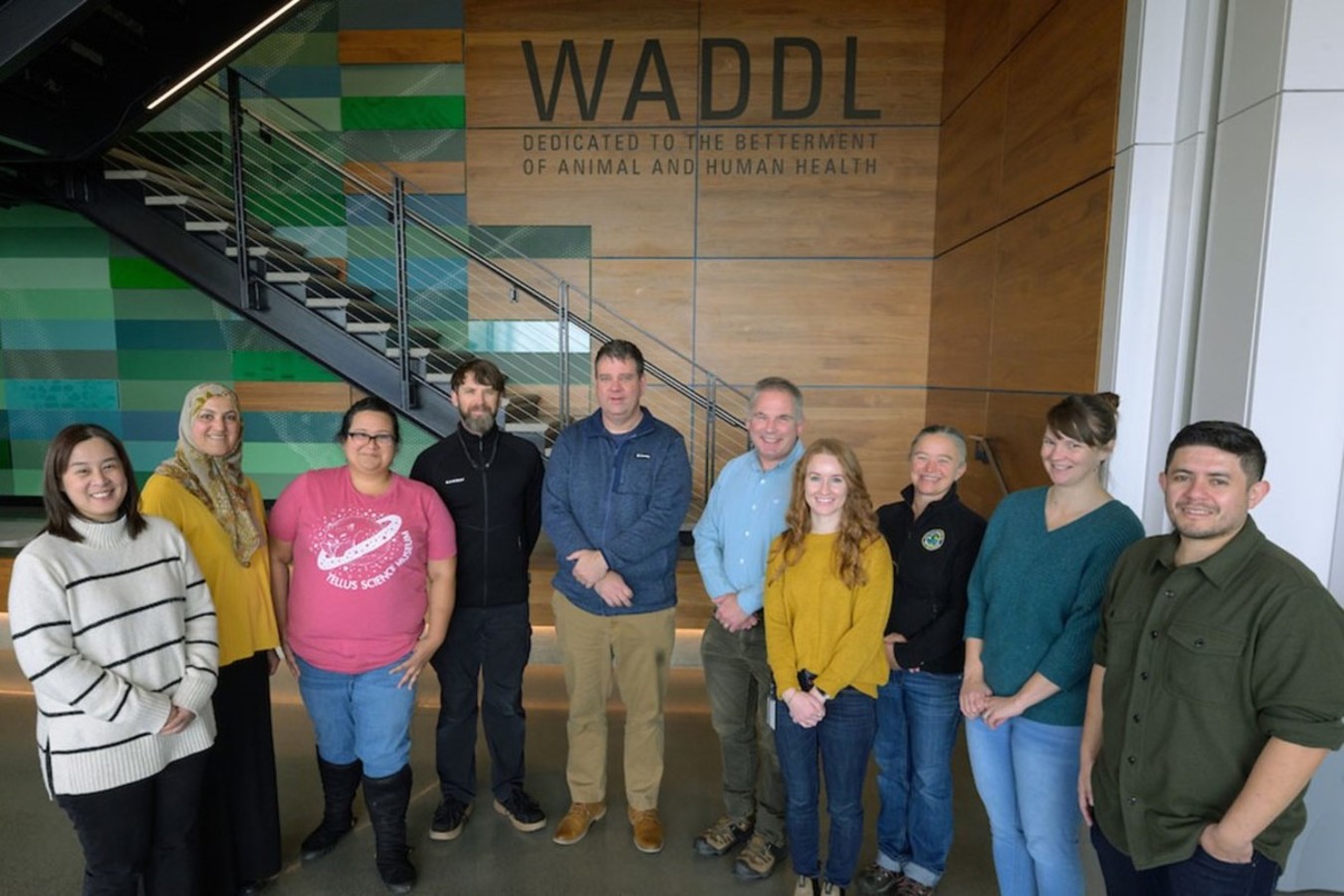
BBI’s Dr. Lea Starita, Ph.D., donates a DNA sequencing machine and other equipment from her lab to the Washington Animal Disease Diagnostic Lab (WADDL) for testing chickens and other animals for the H5N1 Avian Influenza. Below, BBI’s Luis Gamboa (far right) meets with members of the Lab. (see: https://brotmanbaty.org/news/bbi-shares-knowledge-and-equipment-with-washington-animal-disease-diagnostic
February
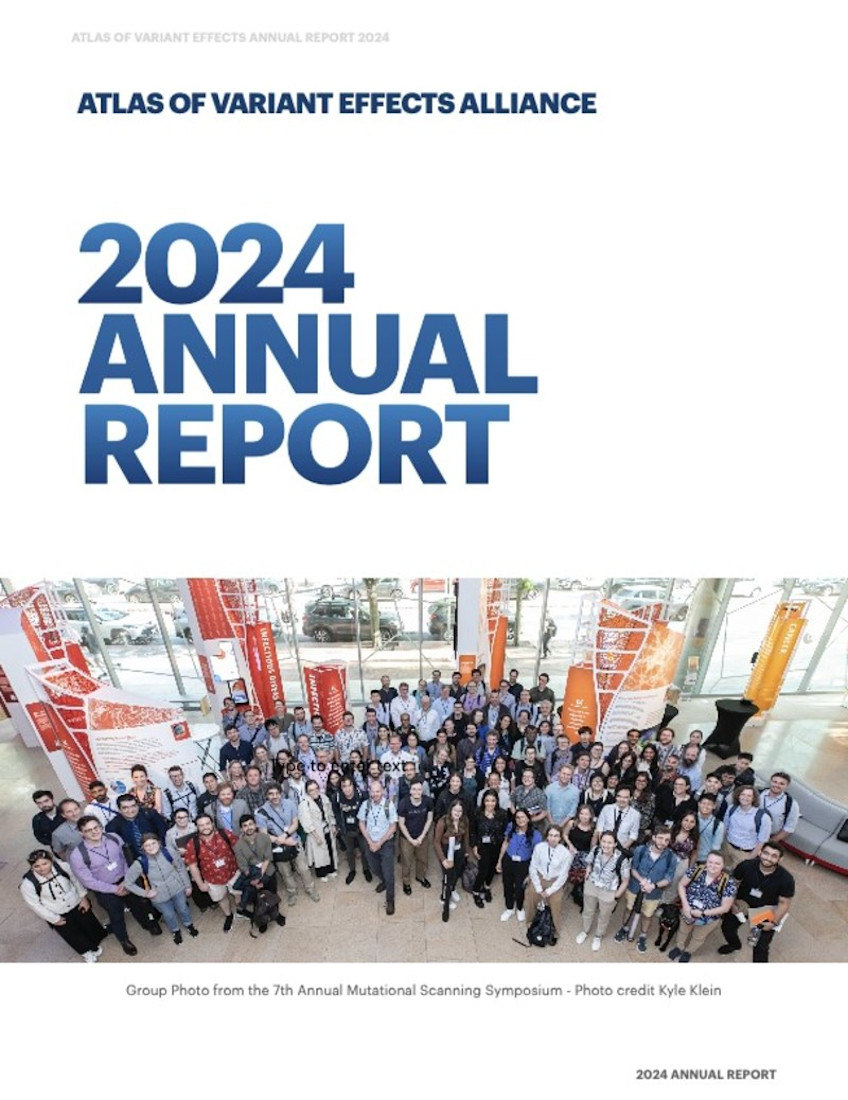
- The Atlas of Variant Effects Alliance chooses “gratitude” as the theme for its 2024 Annual Report and for good reason. “Our journey towards mapping variant effects and creating a comprehensive Atlas of Variant Effects has been nothing short of remarkable,” said AVE Executive Committee Co-Chairs Drs. Doug Fowler of the Brotman Baty Institute and Matt Hurles of the Wellcome Trust Sanger Institute. (see: https://brotmanbaty.org/news/ave-alliance-annual-report-chronicles-endeavors-to-profoundly-impact-human
March
- Washington Research Foundation (WRF) pledges $10 million over five years in support of a new program led by UW Medicine’s Brotman Baty Institute (BBI) and the Allen Institute. The program, SeaBridge, will advance cell and genome reprogramming technologies developed at the Seattle Hub for Synthetic Biology (Seattle Hub) to help address a wide range of diseases. The grant is among the largest in WRF's 44-year history. (see: https://brotmanbaty.org/news/washington-research-foundation-awards-usd10m-to-seattle-hub-to-advance-cell
May
-
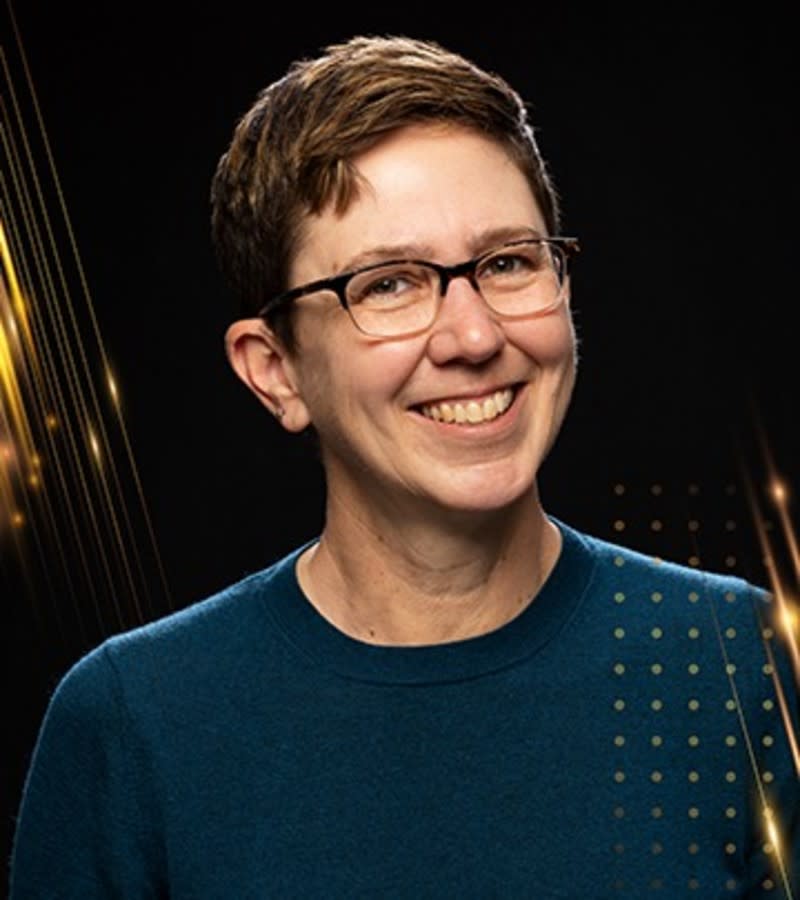
BBI’s Lara Muffley (below) is named the recipient of the UW’s 2024-25 Distinguished Staff Award for collaboration, recognizing an employee who “has made an outstanding achievement or provides ongoing excellence through effective collaboration.” She is one of five awardees selected among nearly 50 collaboration-related finalists, and was recognized in a celebration June 12 by UW President Ana Mari Cauce. (see: https://brotmanbaty.org/news/bbis-lara-muffley-receives-uws-distinguished-staff-award-for-collaboration
-
The 8th Annual Mutational Scanning Symposium is held in Barcelona, in which experts on genetic variant effects convene for three days to discuss their latest research. (see: https://www.varianteffect.org/mss2025/)
June
- For five days in June, BBI and the Fred Hutchinson Cancer Center host a collaboration between artists and scientists (see photo below) – a unique endeavor with a unique title, “SxAffold,” (“Scaffold”). Nasa Sinnott-Armstrong, Ph.D., an Assistant Professor in the Hutch’s Herbold Computational Biology Program, and colleagues Callie Chappell (a Postdoctoral Fellow from Stanford) and Rodrigo Guzman-Serrano (an art curator and Ph.D. candidate at Cornell) came up with the idea and jointly ran it. “The goal of SxAffold was to enable artists to experience scientific spaces that are otherwise inaccessible,” said Sinnott-Armstrong. (see: https://brotmanbaty.org/news/science-art-encounter-enables-artists-to-experience-scientific-spaces
 SxAffold artists and organizers pose for a photo during the SxAffold Art Program (Photo by Connor O'Shaughnessy / Fred Hutch News Service)
-
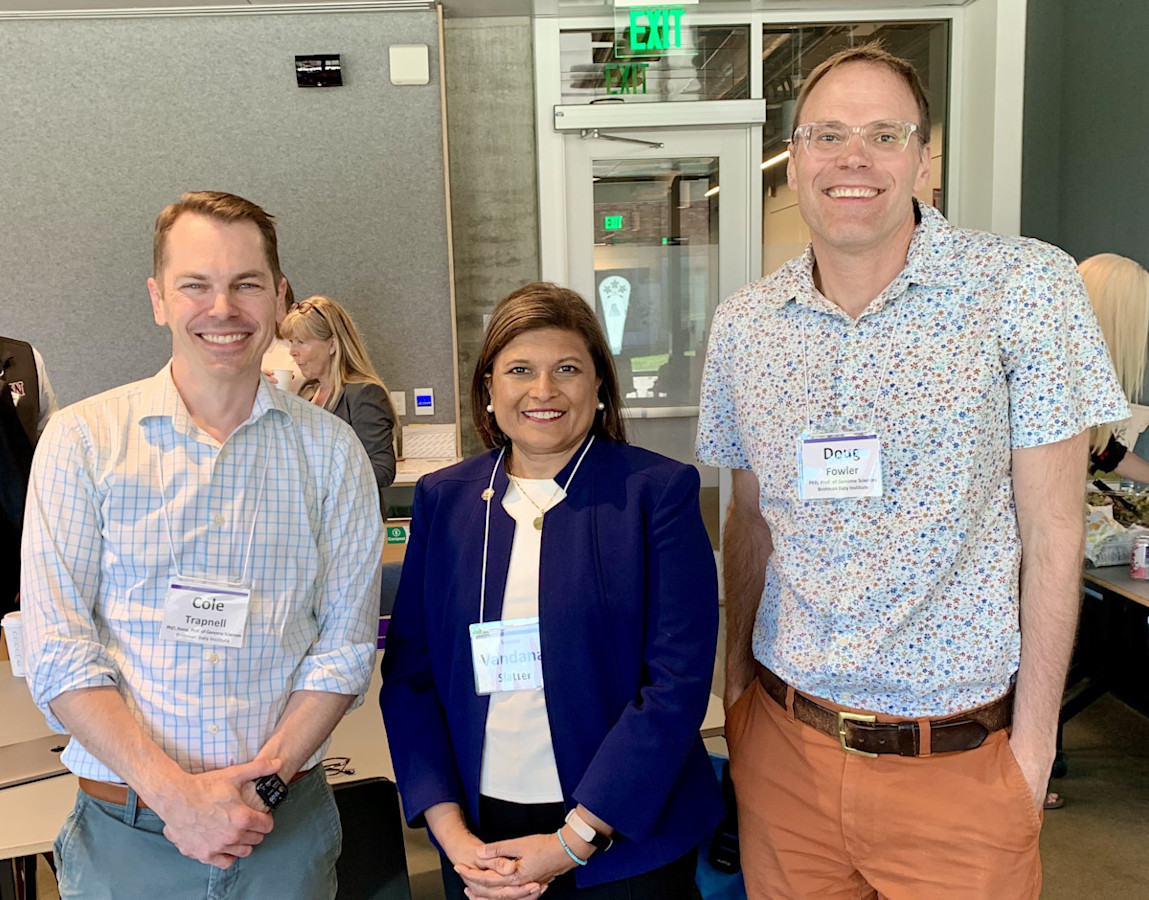
BBI participates in a briefing on its research for members of the Washington State Legislature, focusing on genetic variants and the Seattle Hub for Synthetic Biology. Below, State Senator Vandana Slatter meets with BBI’s Drs. Cole Trapnell (left) and Doug Fowler. Two months later, State Representative Osman Salahuddin toured BBI’s lab for an in-depth discussion on variants.
-
Applications open for the new SeaBridge postdoctoral fellowship program which partners with the Seattle Hub for Synthetic Biology. It will recruit and train approximately 40 postdocs over five years to advance SeattleHub’s technologies, leveraging academic strengths with host laboratories including the UW, Fred Hutch, and Seattle Children’s. The fellowships are funded by a grant from the Washington Research Foundation (WRF), the Chan Zuckerberg Initiative (CZI), and a gift from BBI. The program is administered in a partnership between the BBI and the UW Department of Immunology. (see: https://brotmanbaty.org/news/new-postdoc-fellowship-program-builds-on-innovative-seattlehub-research

July
- Carrie Brockway (below) is named Executive Director for SeaBridge with the Allen Institute. She said: “SeaBridge and the Seattle Hub for Synthetic Biology represent the confluence of all that I love: compelling scientific research and leading-edge technology. The opportunity to program cells has significant potential to make a huge difference in people’s lives, unlocking therapeutic possibilities.” (see: https://brotmanbaty.org/news/carrie-brockway-new-seabridge-executive-director-motivated-by-compelling

August
- A working group of the Atlas of Variant Effects (AVE) Alliance –for the first time – undertakes a task as much-needed as it is long and overdue: developing more definitive guidelines for genetic variant classification. The group, the ClinGen/AVE Functional Data Working Group, has more than 25 international members from academia, government, and the private sector. BBI’s Dr. Lea Starita is co-chair of the working group. (see:https://brotmanbaty.org/news/ave-alliance-working-group-developing-international-guidelines-for-genetic)
September
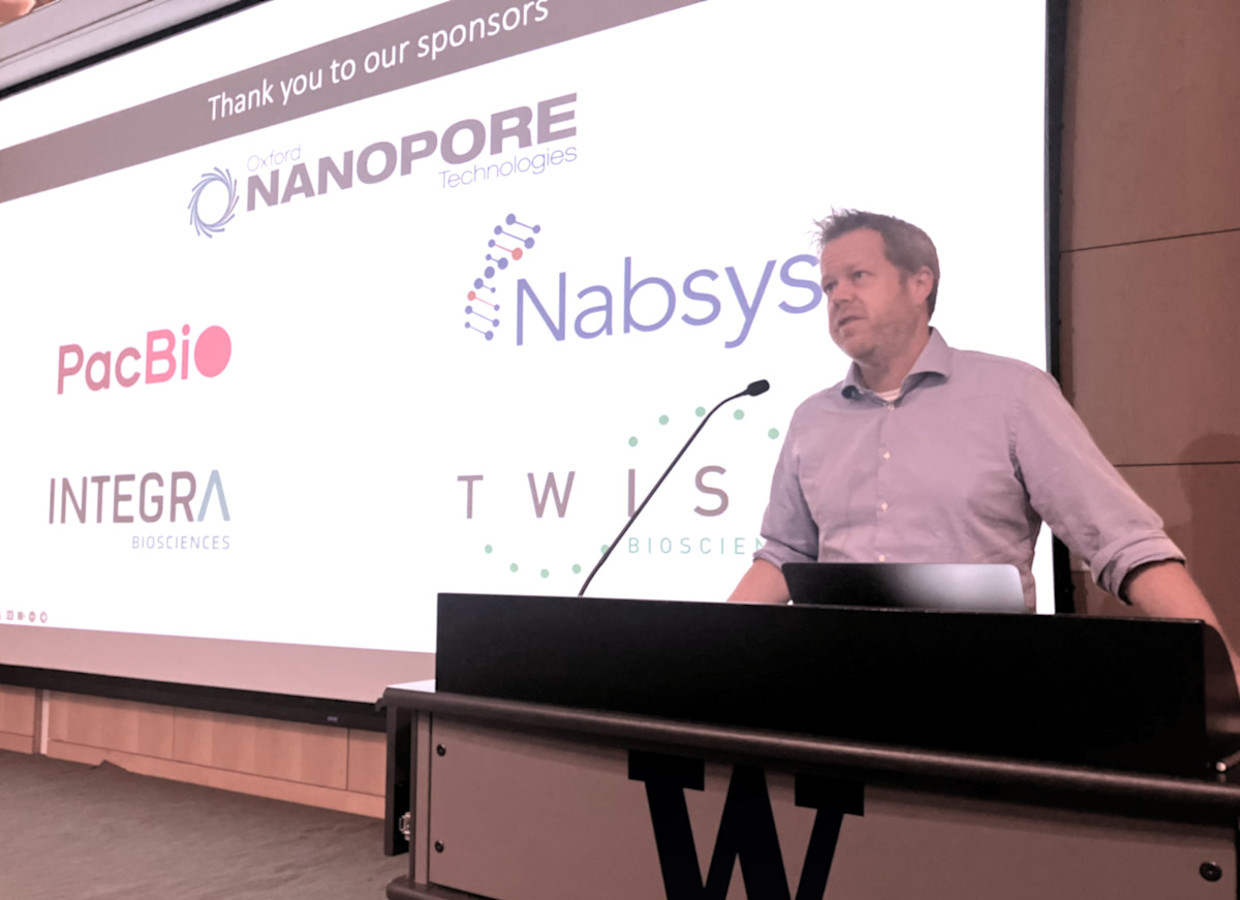
- BBI’s Danny Miller, M.D., Ph.D., (below) convenes the third annual long read symposium. It includes presentations by Sophie Kogut, a graduate student in the Blanco-Melo lab at the Fred Hutchinson Cancer Center, and F. Kumara Mastrorosa, Ph.D., a Post-doctoral Scholar, in the Eichler Lab at the UW. Here is a Q&A exploring their research and impressions of the event. (see: https://brotmanbaty.org/news/long-read-symposium-two-presenters-share-their-research-and-impressions
October
- The Allen Institute's podcast, “Lab Notes,” explores the Seattle Hub for Synthetic Biology. Spend 13 minutes learning how it is bending biology, “designing and controlling living cells to revolutionize our understanding of illness, disease and, ultimately, discover new treatments.” (learn more and listen: https://alleninstitute.org/news/lab-notes-bridging-science-fiction-and-reality-seattle-hub-for-synthetic-biology/
November
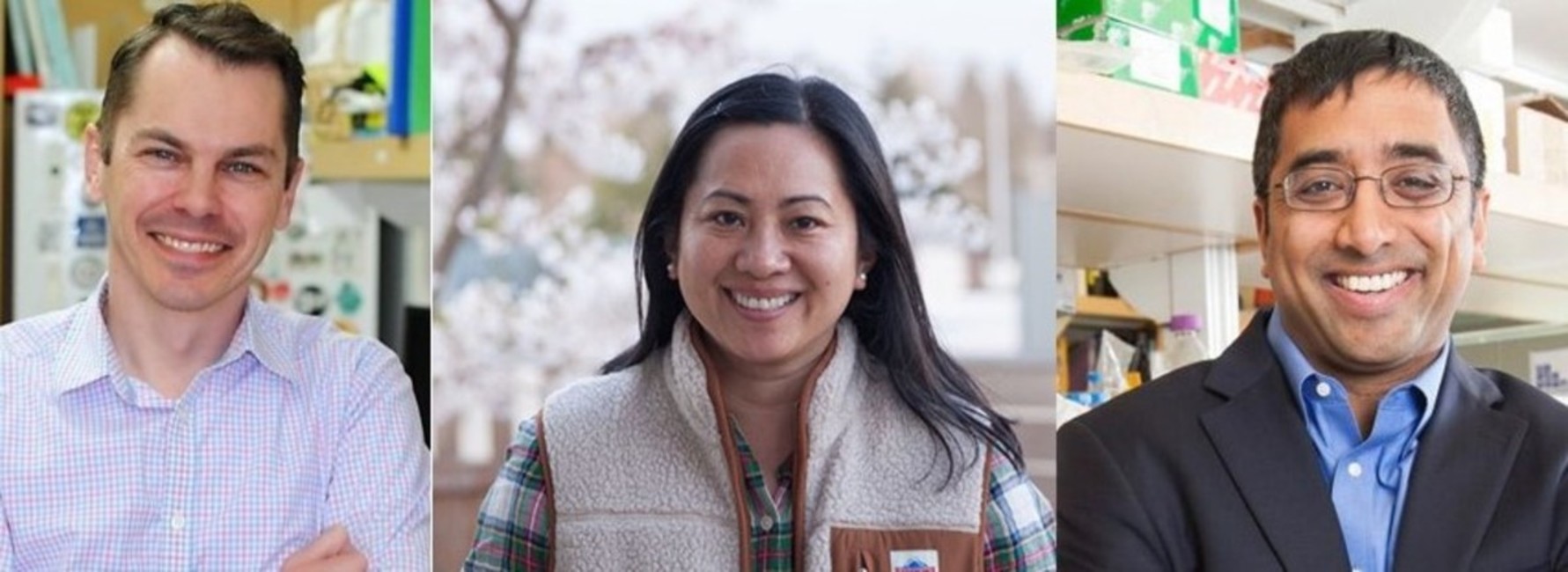
- BBI’s Drs. Riza Daza, Jay Shendure, and Cole Trapnell are named “Highly Cited Researchers” by Clarivate, a London-based analytics firm. They are among 45 scientists cited from the UW School of Medicine or the Fred Hutch Cancer Center. (see: https://newsroom.uw.edu/blog/uw-medicine-faculty-listed-highly-cited-researchers)
December
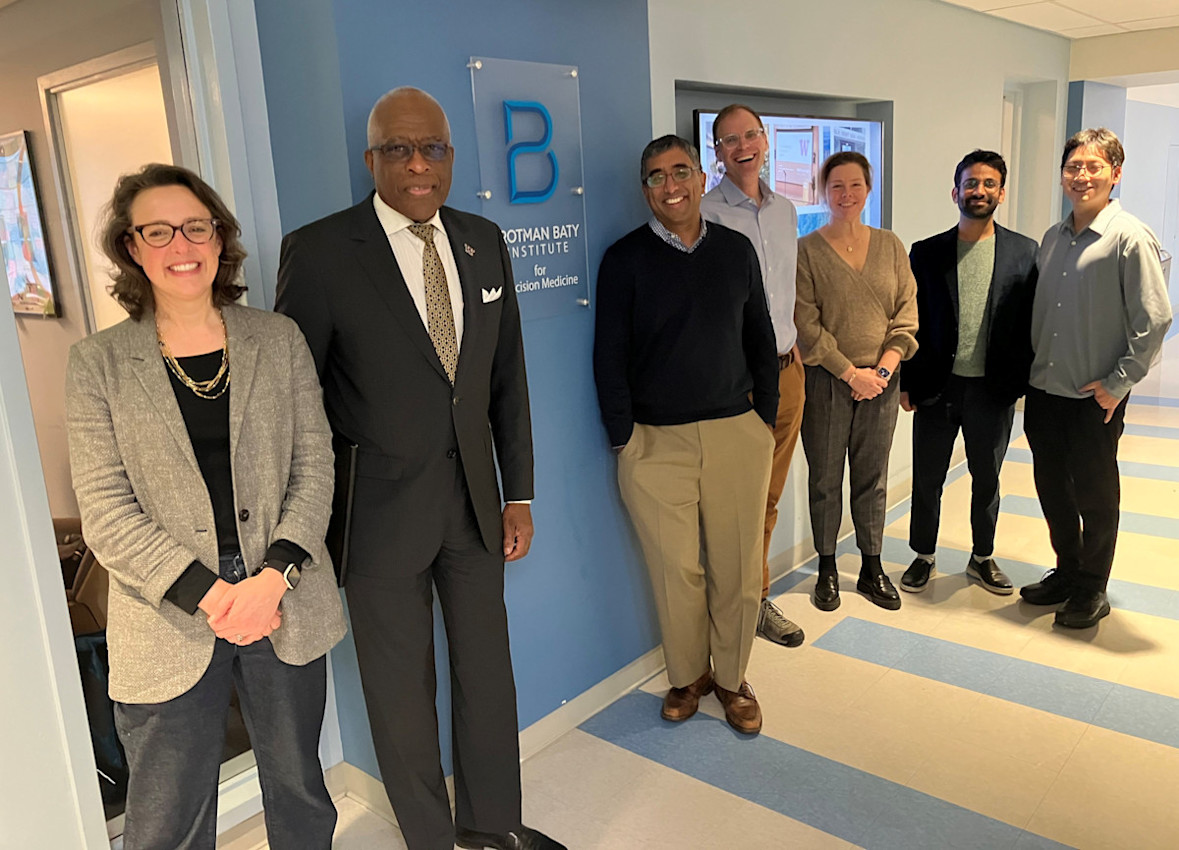
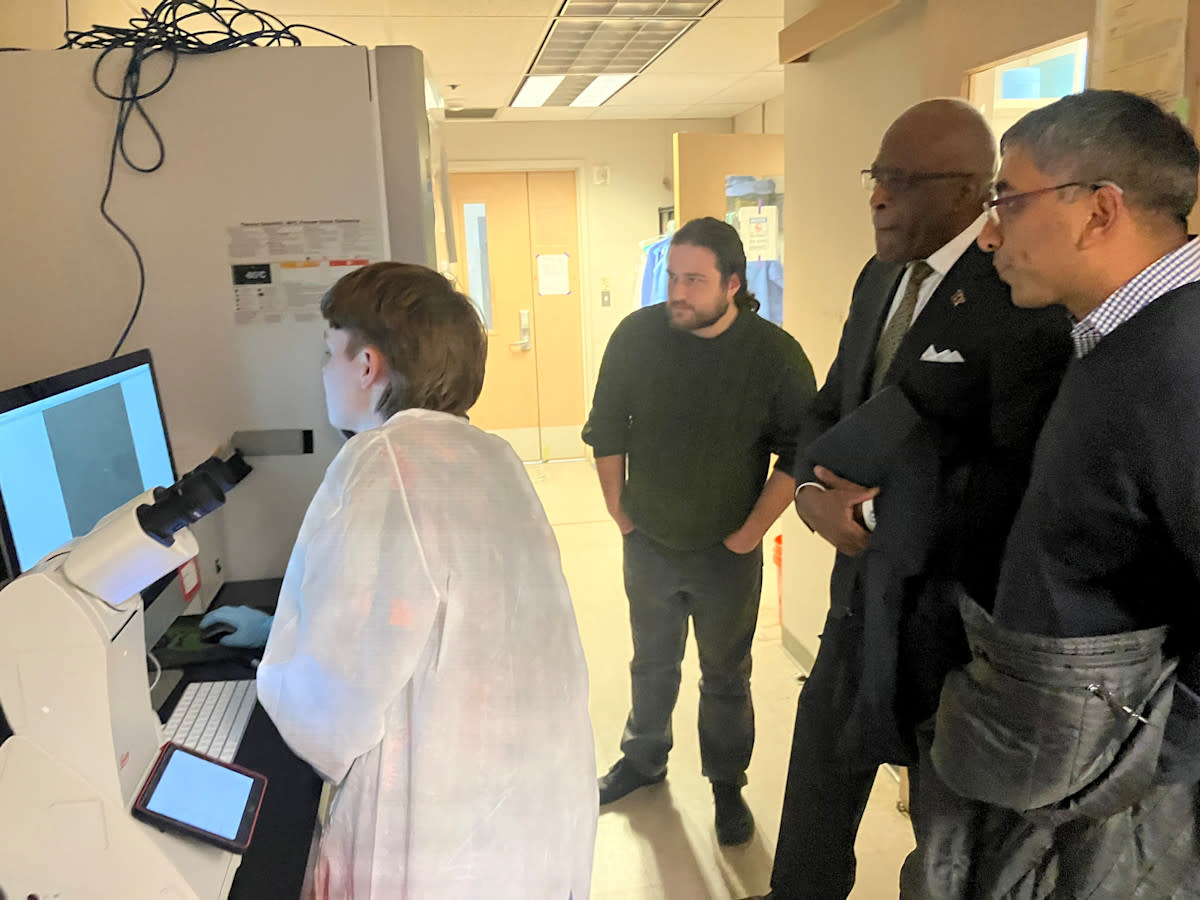
- UW President Robert Jones visited BBI December 8 to learn more about the institute's research. BBI scientists adddressed the health effects of genetic variants, and the development of new technologies to record the activities of individual cells over time. The latter is a collaboration among BBI, the UW, the Allen Institute, and the Chan Zuckerberg Initiative. TOP PHOTO: He meets with (left to right): Drs. Lea Starita, President Jones, Jay Shendure, Doug Fowler, Marion Pepper, Sudarshan Pinglay, and Nobuhiko Hamazaki. BOTTOM PHOTO: BBI Graduate Student Research Assistant Melissa Hopkins (left) discusses BBI’s work on genetic variants with President Jones, along with Laboratory Research Manager Nahum Smith (center) and BBI Scientific Director Jay Shendure (right).